Subscribe to Recasting Regulations to Sign up for Loper Bright Updates.
"*" indicates required fields

As reported by Cause of Action Institute, which represents the fishermen in Loper Bright Enterprises v. Raimondo, the head of NOAA Fisheries sent a letter to the New England Fishery Management Council last week directing it to “revise and potentially withdraw” industry-funded monitoring requirements for the Atlantic herring fishery. In the absence of council action, the agency suggested the Secretary of Commerce could initiate a direct amendment to “rescind these measures.”
(more…)
As Professor Jonathan Adler covered in Reason, the Solicitor General has declined to defend the D.C. Circuit’s split-panel decision in American Gas Association v. Department of Energy in the U.S. Supreme Court.
(more…)
Last week, my colleague, Michael Pepson, noted that Loper Bright might come up during oral argument in Monsanto Company v. Durnell, a case that raises the question of whether the Federal Insecticide, Fungicide, and Rodenticide Act (“FIFRA”) preempts state labeling requirements. Although neither party cited Loper Bright during briefing on the petition for writ of certiorari, the case did come up in the respondent’s answering brief on the merits. Specifically, Mr. Durnell argued that, under Loper Bright, the onus was on Monsanto to “point to text that expressly vests EPA with authority to render conclusive pronouncements on the meaning of FIFRA’s misbranding provisions and their application to particular pesticides.” In other words, unless Congress had expressly given the EPA exclusive jurisdiction to regulate herbicides like Monsanto’s weedkiller, Roundup, there could be no preemption of Mr. Durnell’s failure-to-warn claim under state labeling laws.
(more…)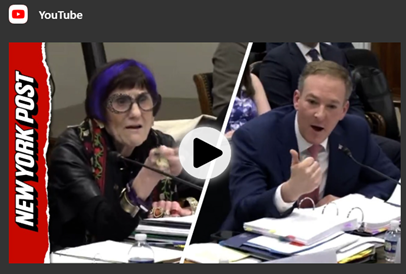
“In light of the shocking news uncovered by EPA Administrator Lee Zeldin that after almost two years some members of Congress, including ranking member of the House Appropriations Committee Rosa DeLauro, still have not heard that the U.S. Supreme Court overturned Chevron deference in Loper Bright and now requires regulatory agencies to adhere to the text of their authorizing statutes, Americans for Prosperity Foundation is extending an open hand to Rep. DeLauro’s office and offering to provide an in-person briefing for her entire staff and also adding its key policy staffers to AFPF’s Recasting Regulations newsletter.
“Recasting Regulations is the top resource for all the recent developments on the implementation of Loper Bright, with a new edition going out just this morning,” said AFPF Senior Policy Counsel Ryan Mulvey.

The past two months have seen Loper Bright play an important role in the adjudication of several appeals across multiple circuit courts. Here are the instances where Loper Bright, and the end of Chevron deference, was particularly notable.
(more…)The Yale Journal on Regulation’s blog, Notice & Comment, has published the second half of a two-part series exploring the impact of Loper Bright on the two major political parties and their members in Congress.
The first half, published last month, explored how Chevron deference possibly served a uniting function for the GOP, and that its elimination by the Supreme Court now leaves an “open question whether business-minded conservatives and antistatist conservatives can maintain their previously productive alliance.”
(more…)
The Supreme Court will hear oral argument next week in Monsanto Company v. Durnell. The question presented is “[w]hether the Federal Insecticide, Fungicide, and Rodenticide Act [(“FIFRA”)] preempts a label-based failure-to warn claim where EPA has not required the warning.” Neither party cited Loper Bright in their cert-stage briefing. Nor did the Missouri state-court decisions below, which is perhaps unsurprising. But as Professor Josh Blackman flagged in Reason today, the respondent’s merits brief does cite Loper Bright in arguing against preemption.
(more…)
By Ryan P. Mulvey & Michael Pepson
The Sixth Circuit’s recent decision in Department of Labor v. Americare Healthcare Services is a useful indicator of how courts operationalize Loper Bright when a statute contains an express delegation of authority to an agency. The case also spotlights related questions about the scope of statutory stare decisis for Chevron-era precedents, and the status of broad “housekeeping” statutes that agencies may claim confer legislative rulemaking authority.
(more…)
The Supreme Court has granted the petition for writ of certiorari in Beaird v. United States to review whether Stinson v. United States “still correctly states the rule for the deference that courts must give the commentary to the Sentencing Guidelines.” This development not only opens the door for reconsideration of another judicial-deference doctrine in the wake of Loper Bright, but it positions Beaird as a test case for whether Loper Bright’s underlying reasoning—that judges must provide their independent judgment about the best meaning of the law—extends beyond the administrative-law context.
(more…)
In a recent post for the Yale Journal on Regulation’s “Notice & Comment” blog, law professor Daniel Deacon has previewed a draft report prepared for the Administrative Conference of the United States entitled “Drafting Regulatory Preambles.” Described as an exploration of “best practices for drafting regulatory preambles in light of recent developments in judicial review of agency action,” the paper proposes to provide insight into how the Supreme Court’s overruling of Chevron deference in Loper Bright Enterprises v. Raimondo has impacted behavior among lawyers and policy experts in the federal bureaucracy.
(more…)