Subscribe to Recasting Regulations to Sign up for Loper Bright Updates.
"*" indicates required fields

Earlier this spring, in Rutherford v. United States, the Supreme Court held the U.S. Sentencing Commission’s interpretation of 18 U.S.C. § 3582(c)(1) was inconsistent with the underlying statutory text, and that nonretroactive changes in sentencing law could not qualify as “extraordinary and compelling reasons” to justify early release. That decision, and its explanation of the principles that limit the Commission’s delegated authority, accentuates how Loper Bright v. Raimondo now binds every agency—including the Commission.
In her opinion for the majority, Justice Barrett cited Loper Bright when describing how the Commission could indeed give meaning to a statute in its Sentencing Guidelines, so long as its policy statements land within boundaries established by Congress, as discerned by the courts. In the upcoming Term, in Beaird v. United States, the Court will take the proverbial next step by deciding whether so-called “Stinson deference” to the Commission’s commentary on its Guidelines—used to calculate sentences for federal crimes—can or should survive at all.
(more…)
In the wake of Loper Bright and the end of Chevron deference, commentators have wondered whether the Supreme Court’s definitive interpretation of Section 706 could spell the end of other deference doctrines, including those that have developed outside the context of the APA. One conspicuous body of caselaw under suspicion involves deference to the National Labor Relations Board (“NLRB”) and its interpretations of the National Labor Relations Act (“NLRA”).
The D.C. Circuit’s decision last week in Hospital Menonita de Guayama, Inc. v. NLRB may not end the debate over NLRB deference, but it meaningfully shifts its terms. Drawing on Loper Bright and its conception of the Article III judicial function, the Hospital Menonita majority held that courts have an independent obligation to determine the scope of the NLRB’s statutory authority. This is a major development with serious consequences for deference doctrines that implicate independent regulatory agencies, and the ability of those agencies to repackage such deference doctrines as statute-specific delegations under Loper Bright.
(more…)
Professor John Meisel’s recent post at the Yale Journal on Regulation’s Notice & Comment blog offers a fascinating framework for understanding how the Supreme Court’s decision in Loper Bright Enterprises v. Raimondo creates an incentive for Congress to avoid “statutory vagueness” and “draft more precise statutes.” Meisel characterizes the Court’s decision as establishing a “penalty default rule” and makes several predictions for how that “rule” might operate. Those predictions are largely persuasive, but whether they bear out has yet to be seen, and there are some grounds to push back against what I sense to be Meisel’s unspoken pessimism.
(more…)
Last month, the Center for Progressive Reform (“CPR”) published a report analyzing the reception of Loper Bright in the lower courts. CPR’s headline empirical finding is that agency “win” rates have dropped from roughly 70% under Chevron to just 57% in the fourteen months following the Loper Bright decision. Given this shift, you might expect the authors—James Goodwin and Federico Holm—to read the trend as substantiating what Loper Bright was designed to do: put judges back in the business of saying what the law is, while also correcting the drift of agencies that were long operating outside the bounds of their express statutory authority.
Yet, in an accompanying blog post, Goodwin opts instead for rhetorical bravado, advancing the bold claim that, while Loper Bright might be popularly treated as an “anti-regulatory” decision, it is in fact “anti-democratic” and “will reinforce existing power disparities in our society.” This is unfortunate framing that is ultimately unsupported by the data underlying CPR’s research. Recent legal outcomes are hardly evidence of a “juristocratic regime” run amok; they are proof that federal courts are once more fulfilling their constitutional role. On closer inspection, the doctrinal “complexities” that Goodwin and Holm highlight as grounds for concluding there is “no Loper Bright ‘framework’ to speak of” are either overstated or fully reconcilable with the logic of de novo review.
(more…)
In Loper Bright v. Raimondo, the Supreme Court overturned Chevron deference, ending forty years of courts deferring to agency statutory interpretations. Now, the duty of saying what the law is has returned to where it belongs: the courts.
Two years later, federal agencies are quickly rewriting the regulatory landscape, reconsidering many old regulatory interpretations that heavily relied on deference. At the same time, a series of executive orders from President Trump have demanded a thorough review across the government to combat overreach. We are now tracking the result of all these moves in one place.

The Departments of Interior and Commerce announced the finalization of a rule rescinding regulations issued by U.S. Fish and Wildlife Service and the National Marine Fisheries Service that had dramatically expanded the scope of the Endangered Species Act to potentially criminalize conduct and private land use decisions Congress did not statutorily authorize the Services to reach. The announcement explains that “[t]his reform is based on the Supreme Court’s 2024 decision in Loper Bright v. Raimondo[.]” The Services concluded that their regulations were not the best reading of the law and, moving forward, will stand on the statutory text Congress enacted without regulatory gloss. Americans for Prosperity Foundation filed a comment supporting the Services’ authority to rescind their prior regulations. Additional background here. AFPF applauds this decision, which is a win for the separation of powers and property rights that also respects the ESA’s statutory protections of the environment.

In June 2024, a landmark Supreme Court decision — Loper Bright Enterprises v. Raimondo — changed how federal laws are interpreted. While government agencies possess the constitutional authority to create regulations that explain how to implement a statute on a daily basis, they do not have the authority to interpret unclear laws.
In the Loper Bright case, a federal agency sought to force fishermen to pay out of their own pockets for at-sea monitors — biological technicians who are onboard to prevent overfishing — when the law was ambiguous about who should pay the fee. By overturning decades of precedent, the Supreme Court limited agencies’ ability to interpret unclear statutes and reaffirmed the roles of Congress and the courts in making and interpreting laws.
AFP Foundation’s Ryan Mulvey in RealClearPolicy on how “Loper Bright has proven more immediately transformative for the executive branch — and it may still force Congress to confront responsibilities it has long avoided”:
In practice, agencies are increasingly approaching rulemaking with an eye toward whether their interpretations can survive independent judicial review as the best reading of the law. That shift affects not only litigation risk, but how agencies evaluate proposed regulations before they are issued, with greater emphasis on statutory text and less reliance on judicial deference as a backstop. The administration claimed it finalized 646 deregulatory actions in 2025. But after including guidance documents published in the Federal Register and proposed rulemakings, the total to date appears closer to 1,500.
The stakes of this shift are already visible in major regulatory disputes. Consider the EPA’s decision to rescind its 2009 greenhouse gas endangerment finding. The administration says the rescission will produce substantial economic benefits; critics argue it undermines federal climate policy. Public debate around that decision has centered on Loper Bright. When Rep. Rosa DeLauro recently questioned EPA Administrator Lee Zeldin’s interpretation of the Clean Air Act, Zeldin responded by invoking the Supreme Court’s insistence that agencies adhere to the best reading of the laws they administer.
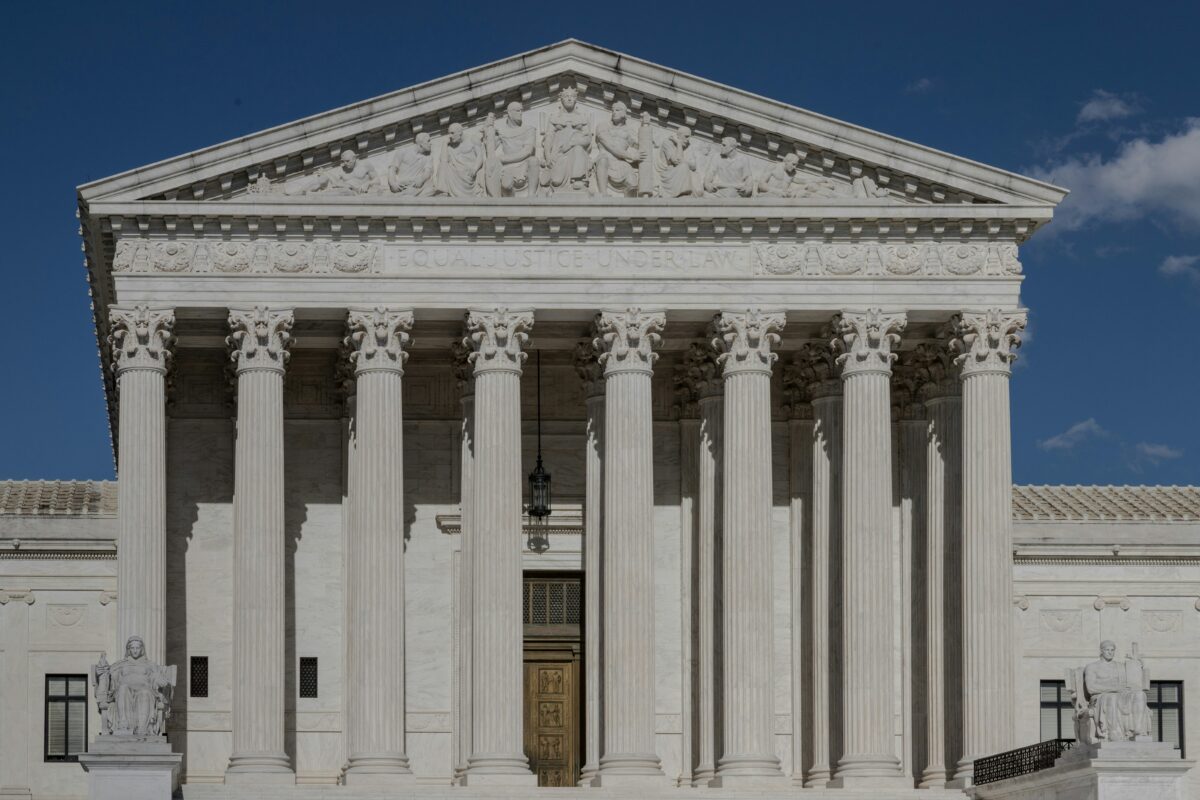
Santa Fe Institute and Foundation for Economic Education trustee John Chisholm in the Wall Street Journal revisiting Justice Kagan’s worry that ending Chevron deference would “cause a massive shock to the legal system.”
What about Justice Kagan’s warning? Two years on, no “massive shock” has materialized. Agencies still prevail in most challenges. Empirical studies put their win rate at roughly 75% when courts applied Chevron and near 60% on established rules since Loper Bright. The change has been evolutionary, not revolutionary, as agencies revise and defend their rules more carefully, rather than watch them swept away.
Overturning Chevron is often cast as a fight over control of the administrative state. It is better understood as a question about the quality of decision-making—whether a federal law is best interpreted by one, often partisan agency or by a distributed network of courts engaged in continuous, real-world discovery.
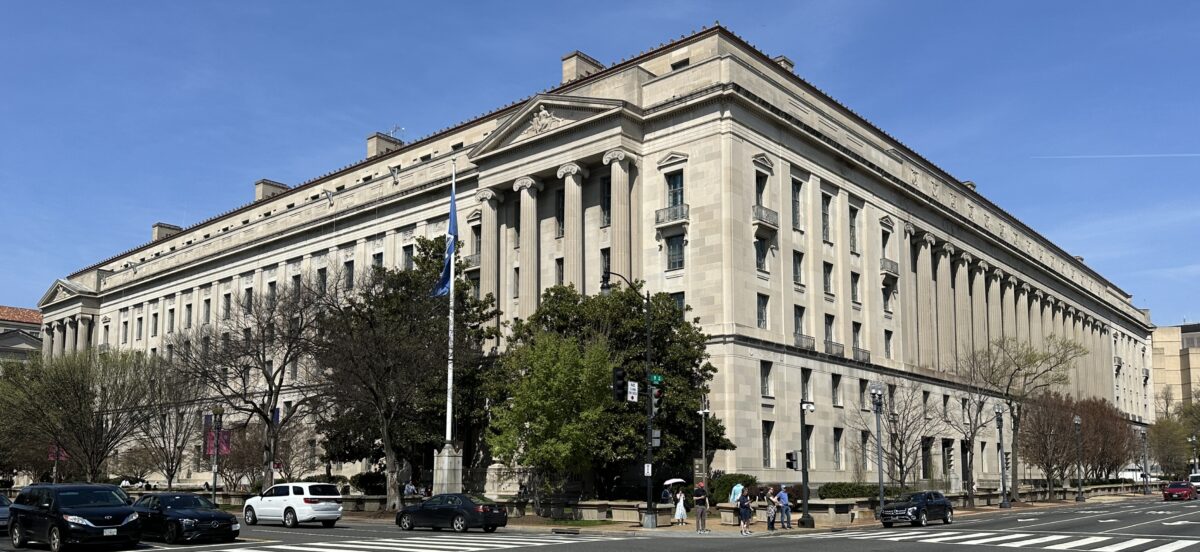
Law & Liberty published an essay by AFPF’s James Valvo & Ryan Mulvey on how a recent dustup over the constitutionality of the Presidential Records Act provides an opportunity to strengthen antifragile government. The essay opens:
The Presidential Records Act (PRA) has lately been a source of controversy. The Department of Justice’s Office of Legal Counsel (OLC) published an opinion at the beginning of April that concluded the PRA is unconstitutional because it “exceeds Congress’s enumerated and implied powers” and “aggrandizes the Legislative Branch at the expense of the constitutional independence and autonomy of the Executive.”
OLC’s opinion has raised eyebrows. It may even be wrong on the law. Nevertheless, it is good to see the political branches jockeying for position over the constitutionality of one another’s actions. A healthy, antifragile government requires occasional interbranch battles over the structure of our government. A separation of powers that is never tested risks atrophy. But for several decades, the executive branch has been on a winning streak; the OLC opinion presents a fresh opportunity for Congress to reassert itself.