Subscribe to Recasting Regulations to Sign up for Loper Bright Updates.
"*" indicates required fields
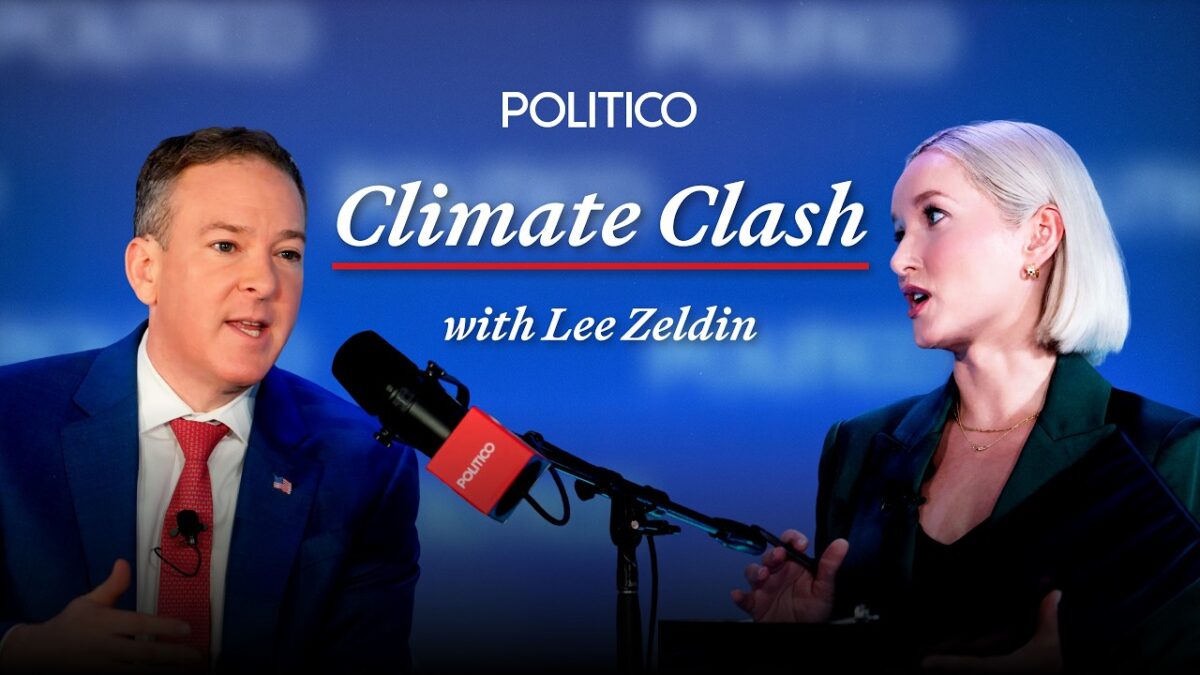
In a recent Politico interview, when asked about a “fundamental shift” in the focus of the Environmental Protection Agency under his tenure, Administrator Lee Zeldin highlighted how the Supreme Court’s decision in Loper Bright Enterprises v. Raimondo is paramount to his decision-making.
(more…)
Earlier this week, the Supreme Court granted the petition for writ of certiorari in American Gas Association v. Department of Energy, vacated the D.C. Circuit’s judgment below, and remanded for reconsideration “in light of the position asserted by the Solicitor General” in the government’s response brief. This move revives the fight over the validity of the Department of Energy’s (“DOE”) efficiency standards for residential furnaces and commercial water heaters. More importantly, the GVR puts front and center on remand a question that courts are already grappling with: can Loper Bright be sidestepped by recasting legal interpretation as an exercise of fact-bound expertise?
(more…)
In this final panel from the Gray Center’s October conference, moderator Aaron Nielsen (UT Austin) speaks with Judge Naomi Rao (D.C. Circuit) and Judge Steven Menashi (Second Circuit) about their role as judges after Loper Bright ended Chevron deference.
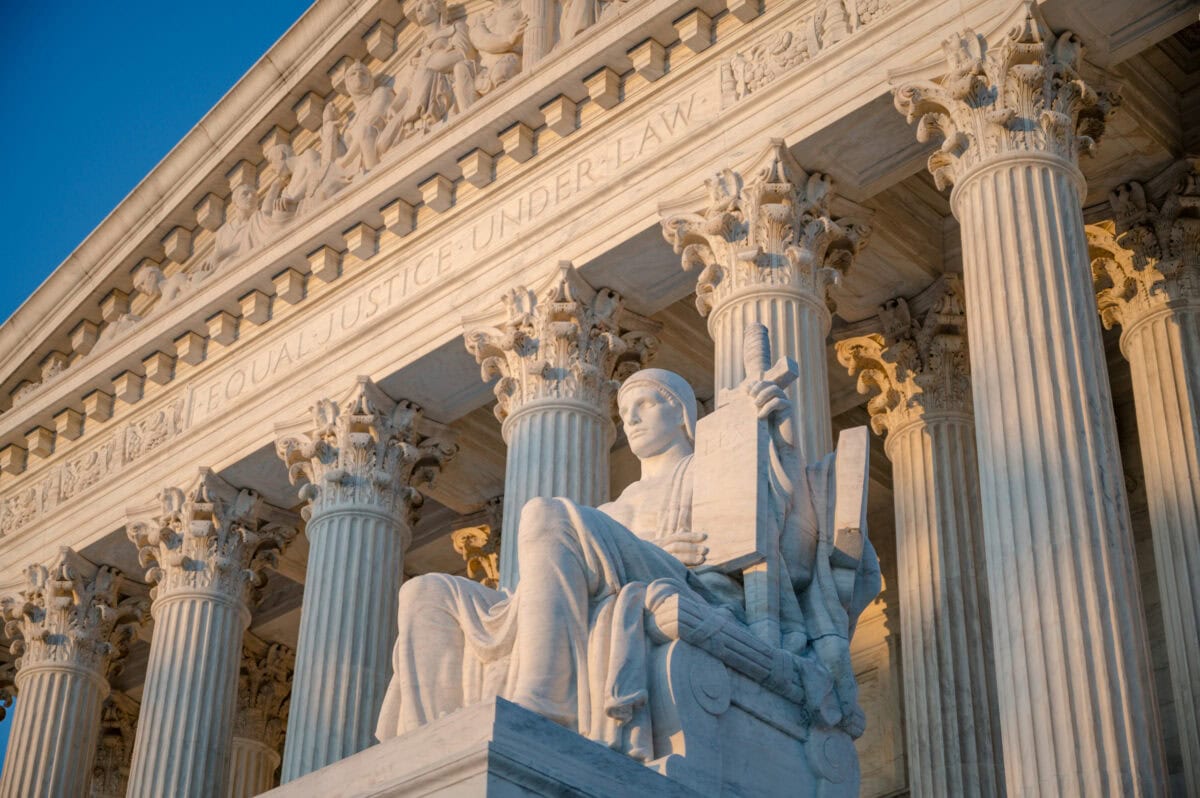
Last week, in Rutherford v. United States, the Court held 6-3 that certain nonretroactive changes to federal mandatory minimum sentences effectuated by the First Step Act (FSA) do not qualify as an “extraordinary and compelling reason” that can justify a reduced sentence under the “compassionate release” exception to the general rule against district courts modifying imposed sentences. In plain English: the Court’s ruling means the FSA’s sentencing reforms cannot be used to justify reduced sentences and early release for prisoners already convicted of those same offenses, even though they may have been punished more harshly under the old sentencing regime. It does not matter how extreme the difference in penalties may be or how unfair that result is as a policy matter. More theoretically, this decision may provide some insight into how the Court goes about identifying and construing statutes that delegate discretion to agencies, as well as police statutory boundaries on that discretion, in the wake of Loper Bright. In fact, the Rutherford decision is the first this Term in which the Court has meaningfully discussed how delegations of discretion to agencies should be analyzed and addressed.
(more…)
Several commentators have noted the potential relevance of the Supreme Court’s consequential decision in Loper Bright Enterprises v. Raimondo to coming fights over the authority of the Federal Communications Commission and Federal Trade Commission.
Ed Whelan in National Review recently suggested the FCC’s attempts to “thwart[] judicial review of the legality of . . . license transfers,” which will soon be considered by the D.C. Circuit, could test Loper Bright’s “promise” of “a new era of bureaucratic accountability.”
(more…)
The Securities and Exchange Commission (“SEC”) has rescinded its long-standing Rule 202.5(3) that requires respondents settling allegations with the agency to agree to never “publicly deny the allegations in the complaint or administrative order” or risk having their settled charges reopened.
(more…)
Professor Aaron Nielson has published some fascinating commentary over at Civitas Outlook in which he explores the dangers of agencies misusing science—or what they claim to be science—to avoid the impacts of Loper Bright and the end of Chevron deference.
(more…)
As highlighted last week, Liberty University Law Review recently published a special issue containing essays submitted as part of its symposium on Loper Bright. But there is other recent scholarship on Loper Bright worth highlighting. One article in particular—“The Gray Area: Finding Implicit Delegation to Agencies After Loper Bright,” by Harvard Law professor Matthew Stephenson—deserves serious engagement.
(more…)
Last fall, Liberty University School of Law hosted a special symposium entitled “Loper Bright: A New Era of Administrative Law.” As we previously reported, the event included several panel discussions about the impact of the Supreme Court’s landmark decision, as well as a special keynote address by Chief Judge Jennifer Walker Elrod of the U.S. Court of Appeals for the Fifth Circuit. Academic investigation of those impacts is vital for appreciating the ways in which Loper Bright will influence the direction of federal administrative law, as well as the executive branch’s reaction in setting its regulatory agenda and Congress’s possible re-engagement with its vested legislative authority and design of delegations to regulatory agencies.
(more…)
Last month, the Supreme Court granted certiorari in Beaird v. United States, indicating it would consider whether Stinson v. United States “still correctly states the rule for the deference that courts must give the commentary to the Sentencing Guidelines.” As I explained at the time, this move not only “opens the door for reconsideration of another judicial-deference doctrine,” but more importantly “positions Beaird as a test case for whether Loper Bright’s underlying reasoning—that judges must provide their independent judgement about the best meaning of the law—extends beyond the administrative-law context.”
(more…)