
Subscribe to Recasting Regulations to Sign up for Loper Bright Updates.
"*" indicates required fields

A recent Brookings article, titled “Will the Supreme Court’s Chevron decision undercut Trump’s unilateral presidency?,” suggests that “overturning of the Chevron doctrine may unintentionally weaken [President] Trump’s ability to govern unilaterally by empowering lower courts—often selected through strategic forum shopping by his opponents—to more freely block his executive actions.” That somewhat misunderstands the intent and meaning of Loper Bright overruling Chevron.
Loper Bright is about principle and process—how public policy choices should be made and by whom: the Executive Branch going it alone or Congress through duly enacted legislation? The whole point of repudiating Chevron’s fiction that statutory ambiguity or silence transferred to the Executive Branch power to make policy choices announced in legislative rules with the same force as statutes is to put that power back where the Constitution put it, vesting all legislative power in Congress, subject to constitutional limits on federal power.
(more…)
The Brookings Institution published a commentary piece from Frank J. Thompson, Distinguished Professor of Public Affairs Emeritus & Faculty Director at Rutgers University, arguing that “[t]he Supreme Court’s overturning of the Chevron doctrine may unintentionally weaken Trump’s ability to govern unilaterally by empowering lower courts—often selected through strategic forum shopping by his opponents—to more freely block his executive actions.”
This article explores factors that will probably lead the Supreme Court’s reversal of Chevron to have a modest negative effect on the ability of Trump’s unilateral presidency to achieve its goals. Historically, the doctrine has galvanized some deference to the executive, primarily at the district and appellate court levels. The Supreme Court had abandoned obeisance to the doctrine more informally prior to Trump’s first term. Chevron’s reversal opens the door to the greater influence of the courts in shaping public policy. It elevates the potential importance of a judge’s partisan policy preferences in rendering decisions. As a result, forum shopping by opponents of the administration could become more strategic, and the administration’s success rate in lower courts may decline. But the impact of any such development on the Trump unilateral presidency will decline sharply if the Supreme Court curtails the use of nationwide injunctions by the lower courts.
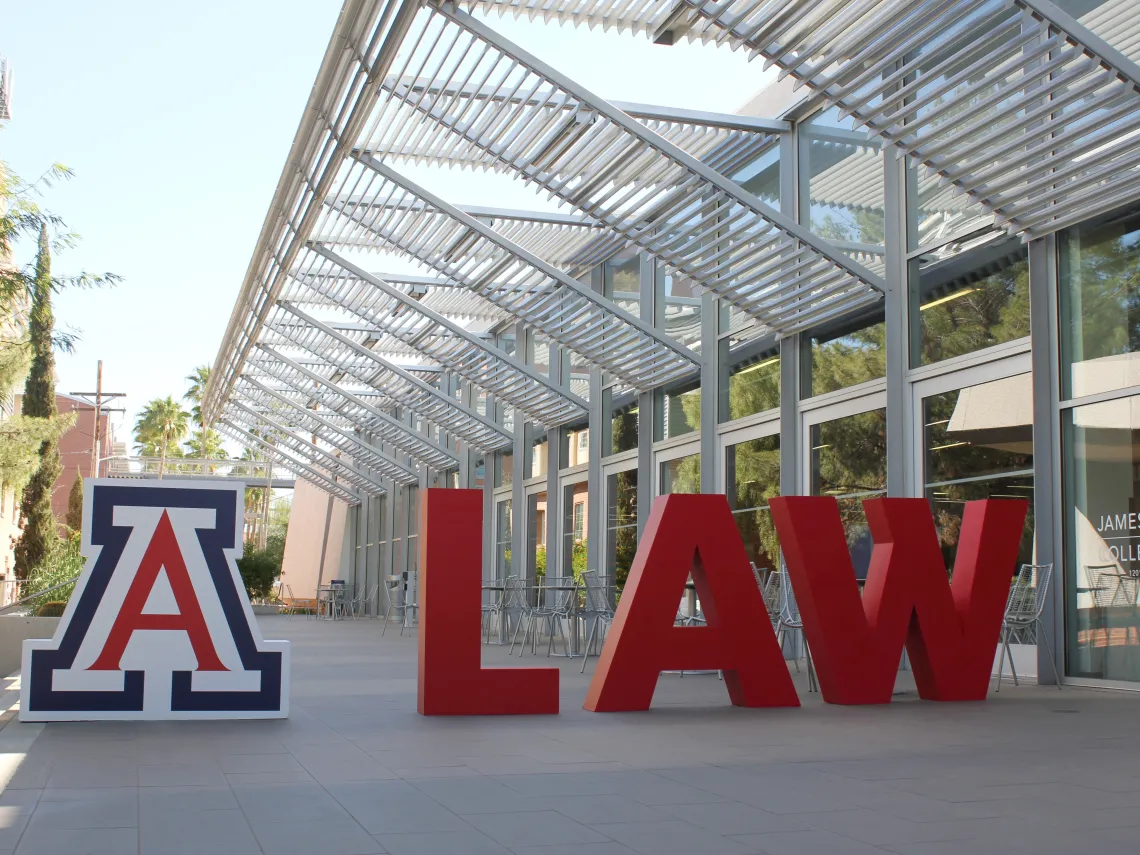
As Loper Bright continues to work its way through the courts, it’s also been rapidly added to administrative law casebooks across the country. University of Arizona – James E. Rogers College of Law Professors Shalev Gad Roisman and Oren Tamir had a novel idea to do a book review of how Loper, and other new administrative law cases, are being treated in casebooks.
They “review the supplements to twelve of the leading administrative law casebooks issued at the end of the Supreme Court 2023 Term, which culminated in blockbuster decisions in Corner Post, Jarkesy, and Loper Bright.”
From the Abstract
They find that:
As gleaned through the supplements, the field of administrative law is presently caught in an overly polarized reaction to the Roberts Court Revolution and the preexisting status quo—of either being for the Roberts Court Revolution and against what preceded it or against the Roberts Court Revolution and for what preceded it. Because of this dynamic, we argue that the supplements and casebooks do not yet do a sufficiently good job of enabling administrative lawyers to imagine a new and different administrative law future, a future that lies beyond either the Roberts Court Revolution or what preceded it.
Pictures of a Revolution: Administrative Law in a Time of Change, 123 Michigan Law Review 1105 (2025).
Americans for Prosperity Foundation filed a comment supporting the Administration’s effort to rescind the regulatory definition of “harm” under the Endangered Species Act and to instead rely on the statutory definition of “take” without the additional interpretive gloss. This rescission is an important example of the types of regulatory definitions that were previously upheld relying on Chevron deference but may not be defensible in the Loper Bright regime.
The comment argues:
Federal agencies must respect and follow the best reading their organic statutes. Agencies
are creatures of statute, which possess only those powers Congress chooses to confer upon them, subject to constitutional limits. They “literally ha[ve] no power to act” absent congressional authorization. Before Loper Bright, the Chevron doctrine allowed agencies to exercise discretionary authority under the guise of resolving statutory ambiguity “even when Congress has given them no power to do so.” In the wake of Loper Bright, federal regulations and other agency statutory interpretations that could only be defended under the Chevron regime as “permissible” interpretations of putatively ambiguous statutory provisions—but which depart from the statute’s single best meaning—cannot be grounded in an actual statutory delegation of discretion and thus fall outside of the agency’s statutory authority.
Link to the full rulemaking docket.

TechFreedom’s Corbin Barthold on the FedSoc Blog explores whether the Trump Administration has “Good Cause” to skip notice and comment in response to the Administration’s executive order directing agencies to repeal “unlawful, unnecessary, and onerous regulations:”
New precedents often raise as many questions as they answer. Take the first case on the executive order’s list: Loper Bright v. Raimondo (2024), which scrapped Chevron deference. Now judges must apply a law’s best reading, rather than any plausible reading an agency might offer. The administration seems to think that, with Loper Bright on the books, agencies must now repeal, without public input, any rule that does not reflect the one correct interpretation of a statute. But working out that interpretation is precisely what the notice-and-comment process is for. And in any event, Loper Bright said that it did “not call into question prior cases that relied on the Chevron framework.” If the Court exercised such restraint, by what authority may agencies bull ahead? Might the Court conclude that past agency reliance on Chevron, like past court reliance on Chevron, remains lawful? Repealing rules without notice and comment doesn’t resolve these uncertainties—it assumes them away. The APA does not grant agencies such conveniences.
It is strange to treat Loper Bright as an agency-empowering decision. “Whatever respect an Executive Branch interpretation” may deserve, it says, quoting a case from 1840, a judge is not “bound to adopt the construction given by the head of a department.” The APA, too, makes clear that “the reviewing court shall decide all relevant questions of law.” But if an agency’s understanding of the law receives no deference, an agency should not be declaring, on its own authority, which of its regulations are so unlawful as to open up the “good cause” shortcut. The proper course is to go through notice and comment, issue the repeal, then let the courts make the final call.

Cass Sunstein’s latest piece on Loper Bright was published in the Duke Law Journal: Our Marbury: Loper Bright and the Administrative State. Here’s the abstract:
Loper Bright, overruling Chevron, is unmistakably part of administrative law’s current “Grand Narrative,” which sees contemporary administrative agencies with suspicion, as a product of successive breaches of Article I, II, and III of the Constitution. The decision should be seen as our Marbury v. Madison—an effort to insist that it is emphatically the province and duty of the judicial department to say what the law is. But will the decision produce large changes? The answer depends, of course, on the meaning of both Chevron and Loper Bright. Under Chevron, courts hardly gave a blank check to agencies; on the contrary, they frequently invalidated agency interpretations of law. How much will invalidation rates rise? We cannot give a confident answer, in part (1) because Loper Bright retains Skidmore (which calls for respectful attention to agency interpretations); in part (2) because Loper Bright recognizes that Congress sometimes explicitly or implicitly delegates interpretive authority to agencies; and in part (3) because (and these must be counted as some of its effects) Loper Bright will (a) increase litigants’ incentive to attack agency interpretations and (b) reduce agencies’ incentive to adopt adventurous interpretations (though agencies may have other incentives to do that). Any numerical projection would be hazardous, but Loper Bright gives a clear signal, a green light to federal courts where Chevron gave a yellow light—which means that it is reasonable to predict a nontrivial increase in judicial invalidations (other things being equal). It is also safe to predict that in the near future, the combination of Loper Bright with increasing judicial skepticism about the administrative state will result in a nontrivial increase in invalidation of regulations designed to protect health, safety, and the environment. In the near future, Loper Bright will also lead to a significant increase in ideological divisions in the lower courts. Still, Loper Bright is our Marbury, and will, sooner rather than later, be seen as such in mounting conflicts between agencies and courts.

Michael Rapoport at Bloomberg Tax has a piece on how “Congressional tax writers are taking steps to head off any future legal challenges to their new tax bill, but it’s a delicate balancing act.”
The bill’s directives for Treasury to act are “more deliberative and detailed” than usual, and that added specificity “may be aimed at reinforcing the Treasury’s authority to issue regulations in anticipation of potential challenges” after Loper Bright, said Jennifer Breen, a partner at Morgan Lewis & Bockius LLP.
The ruling was “a wake-up call to Congress,” Bodoh said. “Loper Bright has caused a re-focus on regulatory validity. I don’t think Congress is leaving any of this to chance.”
The tax bill’s moves suggest “an evolution in the relationship between Congress and the IRS,” Breen said. Congress isn’t just telling Treasury to act, it’s also directing Treasury exactly what to do in many cases, “leaving less to agency discretion than ever before.”

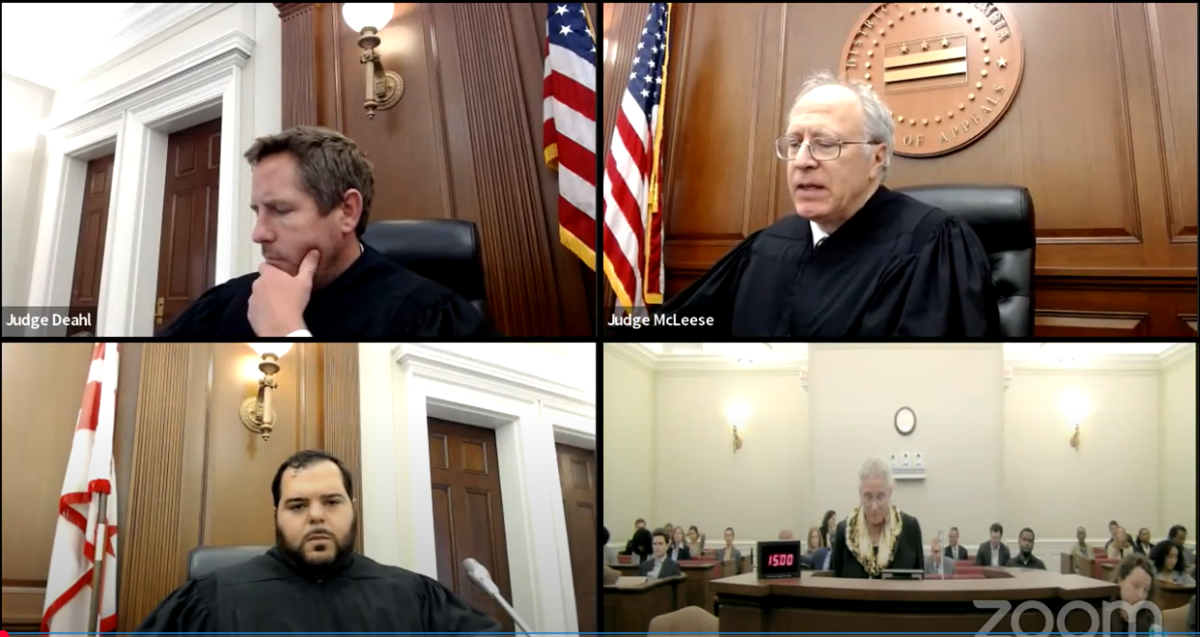
Yesterday, Loper Bright took center stage in an oral argument before the District of Columbia Court of Appeals:
A three-judge panel of Washington, D.C.’s high court at oral arguments Wednesday investigated how the US Supreme Court’s new agency deference standard applies to courts in the district as part of a dispute over a $5.9 million transfer tax refund.
The district government issued an emergency “clarification” amendment to codify deference to its own agencies after the Supreme Court gutted the Chevron doctrine in 2023’s Loper Bright Enterprises v. Raimondo. The doctrine required courts to defer to agency interpretations of ambiguous laws.
The Court specifically asked for oral argument to focus on how Loper would apply:
In their supplemental briefs, the parties discuss the Supreme Court’s decision in Loper Bright Enterprises v. Raimondo, 144 S. Ct. 2244 (2024), and its implications for the doctrine of deference to administrative agencies. After the supplemental briefs were filed, the D.C. Council enacted the Review of Agency Action Clarification Emergency Amendment Act (D.C. Act 25-634). The emergency act has expired, but a temporary act (D.C. Act 25-664) is now in effect through October 2025. The parties should be prepared at oral argument to discuss the temporary act.
No. 22-TX-0820 – LHL REALTY COMPANY DC, LLC, ET AL. v. DISTRICT OF COLUMBIA

Lawrence J. Spiwak, President of the Phoenix Center for Advanced Legal & Economic Public Policy Studies, writes on the FedSoc Blog that the “FCC still can’t interpret Section 230:”
Which brings me to proponents of the FCC’s power to interpret Section 230.
About a month after I wrote my original post, Seth Cooper of the Free State Foundation wrote a response entitled Power to Persuade: The FCC’s Authority to Interpret Section 230 Post-Loper Bright. While Mr. Cooper agreed with me that Loper Bright eliminated the FCC’s power to make binding authoritative legal interpretations of federal statutes, he argued that Loper Bright nonetheless “recognized that agencies retain the power to interpret the meaning of statutes within their jurisdiction and that, pursuant to Skidmore v. Swift & Co., courts still should consider agency views for their ‘power to persuade, if lacking power to control.’” Thus, argued Mr. Cooper, “a Trump 2.0 FCC possesses the power to issue a policy statement, declaratory ruling, and/or published report offering its interpretation of Section 230’s provisions, such as the meaning of ‘good faith,’ as a source of guidance for courts.”
Skidmore notes that agency “rulings, interpretations and opinions . . . while not controlling upon the courts by reason of their authority, do constitute a body of experience and informed judgment to which courts and litigants may properly resort for guidance.” However, Mr. Cooper fails to acknowledge that the “weight [a court should accord to] such a judgment in a particular case” depends on four factors: (1) “the thoroughness evident in [the agency’s] consideration”; (2) “the validity of [the agency’s] reasoning; (3) the agency’s “consistency with earlier and later pronouncements”; and (4) “all those factors which give [the agency] power to persuade, if lacking power to control.”
Skidmore deference is case-dependent, and the FCC has yet to tip its analytical hand in any “policy statement, declaratory ruling, and/or published report,” so it is difficult to prognosticate how a court would view factors (1), (2), and (4).
But the third factor—“consistency with earlier and later pronouncements”—would clearly be problematic for the FCC. The Commission has never attempted to interpret Section 230, so there are no “earlier and later pronouncements” that a reviewing court could compare. The only thing that has been consistent has been the absence of agency action (on a bipartisan basis, no less). Such inaction by the FCC is unsurprising for two obvious and related reasons. First, as noted above, Section 230 does not provide the Commission with any enforcement or other regulatory responsibilities but is instead simply an affirmative defense for civil litigation. Second, and more broadly, digital platforms generally do not engage in any jurisdictional activity covered by the Communications Act. The FCC simply never had any pressing reason to address the question. Thus, any new action by the Commission to interpret Section 230 would be terra nova.

Bloomberg Law’s UnCommon Law podcast continues its series on the “story behind the fishing industry’s Chevron doctrine challenge:”
This season on UnCommon Law, we’re exploring the limits of agency power. To what extent are federal agencies authorized to create and implement regulations that aren’t explicitly mandated by Congress? And what happens when an agency goes too far? In this episode, the story of the fishermen who fought back.
Featuring:
- Wayne Reichle, president of Lund’s Fisheries
- Jeff Kaelin, director of sustainability and government relations at Lund’s Fisheries
- Ryan Mulvey, counsel with the Cause of Action Institute
- Erica Fuller, senior counsel with the Conservation Law Foundation
- Leif Axelsson, captain of the Dyrsten fishing vessel
- Greg Stohr, Supreme Court reporter for Bloomberg News