
Subscribe to Recasting Regulations to Sign up for Loper Bright Updates.
"*" indicates required fields

First, we have Bernard W. Bell from the Rutgers Law School – Newark in the Seton Hall Law Review on “Loper Bright: Resurrecting Skidmore in a New Era.” Some excerpts from the abstract:
In Loper Bright v. Raimondo (2024), the Supreme Court abandoned Chevron deference to agency statutory interpretations, resurrecting the Skidmore “persuasive” deference regime. This article offers three observations.
First, the judicial context has changed since Chevron’s adoption, such that the new” Skidmore deference will produce quite different results than the old.
…
Second, the “major questions doctrine” will make inroads on Skidmore deference when the text favors agencies. The Court’s rejection of Chevron (and reinstatement of Skidmore), was based on the concept that “the law” never simply “runs out.” That proposition directly contradicts the premise of the major questions doctrine, that in some instances the law does indeed “run out” and Congress must create “new” law to directly address crucial issues.
…
Third, the article explores the treatment of Chevron-based interpretive precedents in this second Skidmore era. In Loper Bright, the Court adopted an apparently categorical rule, that Chevron-based precedents remain “good law.” In so choosing, the Court might have sought to avoid the failures of its more nuanced, and ultimately quite unsatisfactory, Brand X approach to Skidmore-based precedent in a Chevron world. However, the Loper Bright categorical rule is less categorical than it seems.
Next, we have Matthew Mulholland from the Lincoln Memorial University Duncan School of Law with “Beyond Saving Ink: How the Current Court Finds Meaning in Statutory Variations Post-Loper Bright.” From the abstract:
This case comment analyzes the Supreme Court’s decision in San Francisco v. EPA, a pivotal moment illustrating the Court’s renewed emphasis on strict statutory interpretation and finding significance in subtle textual variations to limit agency power in the post-Loper Bright era. The case centered on the EPA’s attempt to impose “end-result” prohibitions in San Francisco’s NPDES permit, forbidding discharges contributing to water quality violations or creating pollution under state law. San Francisco argued that these provisions exceeded the EPA’s authority under 33 U.S.C. § 1311(b)(1)(C) of the Clean Water Act, contending that “any more stringent limitation” does not authorize such broad mandates lacking specific, measurable limitations on the facility’s discharges. Applying a strict textualist approach, the Court held that § 1311(b)(1)(C) does not permit the EPA to impose end-result requirements focused on the ultimate condition of the water body rather than the permittee’s specific discharges, emphasizing Congress’s intentional omission of “effluent limitations” in this subsection compared to preceding ones. This decision highlights the Court’s readiness to override decades of agency practice if it conflicts with the statutory text, signaling increased judicial scrutiny of agency interpretations in environmental and administrative law post-Loper Bright, potentially leading to narrower, more literal interpretations absent a clear statutory basis for agency actions. Justice Barrett’s partial dissent advocated for a broader interpretation of “limitation” to encompass the EPA’s end-result requirements as necessary for meeting water quality standards, but the majority’s ruling underscores how the Supreme Court expects the judiciary to take an assertive role in interpreting statutory language and limiting agency power.

The Federalist Society is hosting a Webinar on July 1 at 2:00 PM ET on Loper and the NLRB.
Administrative law is in flux, nowhere more so than at the National Labor Relations Board. The Board has long made labor law (or “policy”) by issuing decisions and applying its own precedent. But in a recent oral argument at the Seventh Circuit, one member of the panel suggested that he didn’t want to hear about “Board law.” The judges, he said, could read the statute for themselves. That statement was controversial and thought-provoking. After last term’s blockbuster decision in Loper Bright Enterprises v. Raimondo, courts are no longer supposed to defer to administrative agencies on legal questions. So does that mean Board law is dead? Or is the issue more complicated? Join our panelists as we dissect the issue.
Featuring:
- Prof. Samuel Estreicher, Dwight D. Opperman Professor of Law Director, Center for Labor and Employment Law Co-Director, Institute of Judicial Administration, NYU School of Law
- Alexander T. MacDonald, Shareholder & Co-Chair of the Workplace Policy Institute, Littler Mendelson P.C.
- (Moderator) Karen Harned, President, Harned Strategies LLC

National Review’s Dan McLaughlin wonders why Attorney General Pam Bondi’s Department of Justice continues to defend the regulation at issue in Loper Bright in the D.C. Circuit:
You might have thought that Loper Bright Enterprises v. Raimondo was a great and conclusive victory for conservatives, and one that would be eagerly embraced by MAGA Republicans eager to housebreak the administrative “deep state.” So, why is this administration’s Justice Department still defending the Loper Bright case?
McLaughlin specifically notes that the DOJ has made no changes to the legal team working on the Loper case:
The Court, having decided the big question, sent the smaller one back to the lower courts to decide under the proper standard. So, Loper Bright is now back at the D.C. Circuit, as Loper Bright Enterprises v. Lutnick. And guess who’s defending it? The Department of Justice under Donald Trump and Pam Bondi. The case is still being defended by Daniel Halainen, a career DOJ attorney hired during the Obama administration, who argued it before the D.C. Circuit back when he was working for Merrick Garland and previously worked on the legal team defending Loper Bright and Chevron at the Supreme Court.
Halainen is still at it, but it’s unclear how much supervision he’s getting from the DOJ, or why the DOJ is still insisting on imposing these costs on boats full of working-class fishermen. Earlier this month, the Supreme Court decided Seven County Infrastructure Coalition v. Eagle County, Colo., which chided courts for not deferring to the policy decisions of agencies where the law allows the agency that discretion.
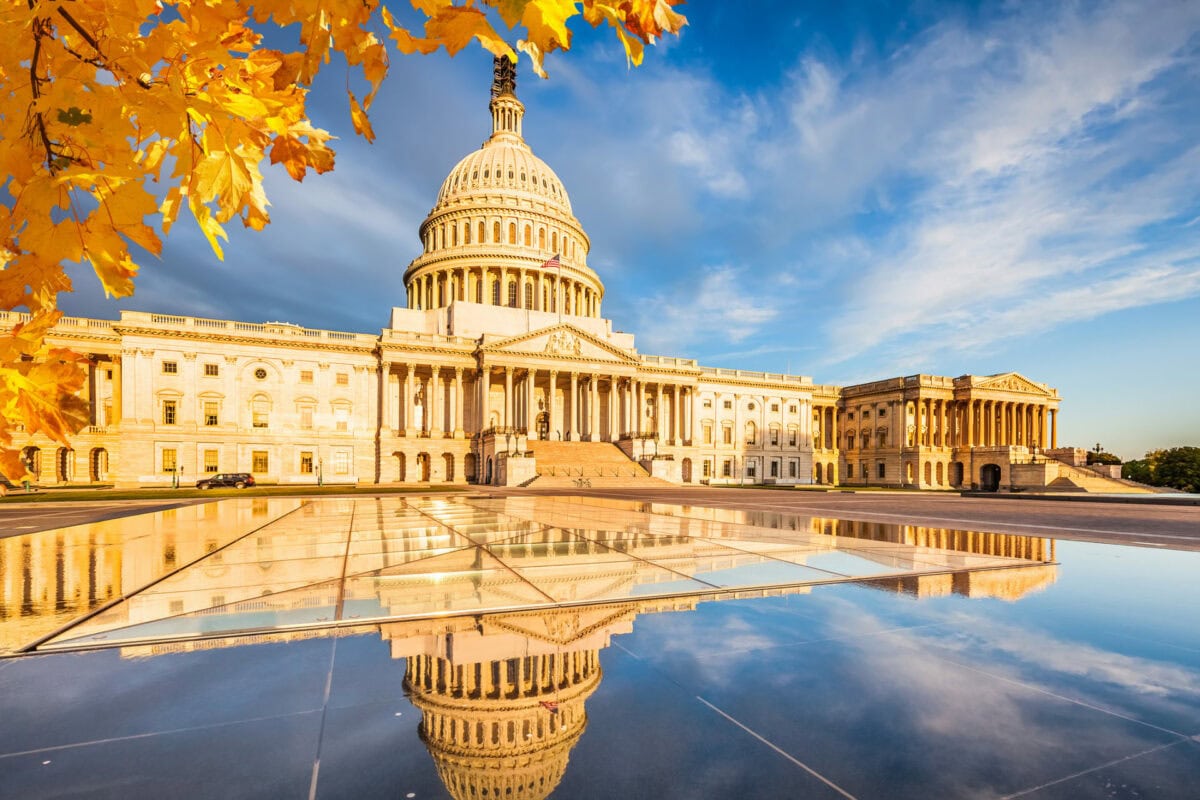
Following the Supreme Court decision in Loper Bright v. Raimondo, which overturned the Chevron doctrine granting federal agencies broad deference to interpret statutes, a “Post-Chevron Working Group” comprised of twenty Republican Senators began working to outline a proper legislative response to the decision and to define a “best practices” for future legislative action. On June 5, 2025, the working group published a 150-page report outlining its findings and recommendations.
Among the material presented, the working group included a section detailing a “Legislative Drafter’s Guide to Deference, Delegation, and Discretion.” After discussing the meaning of deference, delegation, and discretion, and their relevance to the drafting of new legislation, the report included best practices. The goal of new legislation, the report concluded, should be to limit agency action to “ministerial duties.” The text of the statue itself should define the cost-benefit analysis underlying the statute and avoid vague buzzwords that grant agencies enormous leeway to steer legislation away from the legislation’s purpose. As the report notes, “[e]very degree of additional precision, definition provided, or buzzword avoided takes away legal arguments an agency can utilize to exercise discretion or otherwise stretch the meaning of a statute.”
Best Practices
To that end, the report recommended the following key elements for any new legislation.
- Define your terms: “Drafters should ensure that all key terms are defined and that the definitions themselves are narrowly tailored.”
- Use precise and specific terms: The goal is to avoid highly generalized language capable of expansive interpretation and to move instead toward greater specificity. “In reviewing legislative text, a drafter should be able to confidently state that every major term used can be no more precise than its current iteration.”
- Think Like an Administrator: Because agencies often deliberately look for ways to subvert legislative intent and enlarge their own power by latching onto imprecise language in the statutory text, drafters of new legislation “should take on the role of a creative agency administrator and attempt to devise ideas of how the language of a statute could be used to further ideas completely unintended by the drafters or Congress.” The ultimate goal is to limit such agency “creativity” by more careful drafting.
- Avoid Buzzwords: Over time, certain words and phrases typically used in statutory text have proven themselves to be susceptible to abuse and misuse by the agencies. The report highlights some of this problematic wording, including: Reasonable, Appropriate, Necessary, Arbitrary and Capricious, And other measures, and As defined by the administrator/secretary. These words need to be systematically avoided because they grant agencies far too much power to inject their own policy preferences instead of following the will of Congress.
Careful language in the statutory text is the key to limiting agency overreach. As this section of the working group report concludes, “[t]he best way to stop administrative deference, delegation, and discretion is to give agencies nothing more than ministerial duties. Hold other offices accountable, avoid the buzz words, fill up the details, and make the cost-benefit-analysis in the bill text. That is our real test.”

Ohio State University’s Blaine G. Saito new research paper argues that Loper’s impact on tax law may be “more limited than expected.” From the abstract:
Using transfer pricing as an example, the paper demonstrates that while technical regulatory details may survive challenge, fundamental changes would likely fail under the new regime. The arm’s length standard, consistently maintained since 1935 and reinforced through successive statutory amendments including the 1986 Tax Reform Act, exemplifies how Loper Bright effectively freezes agencies from making radical departures—such as shifting to formulary apportionment—from well-established regulatory frameworks. Overall, the decision introduces short-term chaos but may not dramatically increase the rate of tax regulation invalidation, though the path to stability will be turbulent.

A group of twenty Republican Senators that comprise a Post-Chevron working group released a 150-page report this morning. From the Executive Summary:
The Post-Chevron Working Group is comprised of twenty Republican Senators. This report is broken down into three sections: 1. Proposed Legislative Response to Loper Bright; 2. Analysis of the Administrative State’s unpreparedness for and hostility toward Loper Bright; and 3. Legislative Drafter’s Guide to Deference, Delegation, and Discretion.
Legislative Proposals: A series of Short Term priorities, Medium Term projects, and Long Term goals are required to seize this rare “wet cement” moment for our separation of powers.
The Administrative State’s unpreparedness for and hostility to Loper Bright: An analysis of the responses (and non-responses) of the 101 administrative agencies who have published fifty or more final rules since the year 2000 in the Federal Register. This section discusses the Good, the Bad, and the Ugly of our received responses. It also discusses those agencies “Gone Fishing” who did not take the time to respond to a group of twenty Senators’ serious inquiry.
The Legislative Drafters Guide to Deference, Delegation, and Discretion: A practical primer for members and legislative staff on how to think about, spot, and deal with three of administrative law’s most statutory concepts: deference, delegation, and discretion.
UPDATE to add statement from Senator Eric Schmitt (R-MO):
“The Loper Bright decision is one of the most consequential Supreme Court decisions in our nation’s history. The rise of the Administrative State has been antithetical to our Constitution and our republican form of government. In our system, the people elect their leaders. For too long, Washington bureaucrats have been transferring power from the will of the people and into the hands of unelected, unaccountable bureaucrats. President Trump’s Administration has been off to a historic start as it restores accountability to the Executive Branch. As the Chairman of this Working Group, I’m glad to release a report to help guide Congress’ role in restoring accountability, showcase the failures of the Biden era Administrative State, and detail how we can make lasting changes to our bill drafting processes,” said Senator Eric Schmitt.

Emory Law School’s Jonathan Remy Nash writes on “Chevron Stare Decisis in a Post-Loper Bright World” in the Iowa Law Review. The abstract:
In its June 2024 decision in Loper Bright Enterprises v. Raimondo, the Supreme Court jettisoned the longstanding Chevron doctrine, which had directed courts to defer to agencies’ reasonable interpretations of ambiguous statutes. The Loper Bright Court attempted to minimize the substantial effect this change would have on administrative law and governance by declaring that “[t]he holdings” of cases that relied on the Chevron test to conclude “that specific agency actions are lawful . . . are still subject to statutory stare decisis despite our change in interpretive methodology.” But there are two problems with Chevron stare decisis. First, Chevron stare decisis is an ambiguous concept. Second, leaving to the side the cases where the result would be no different under Loper Bright, Chevron stare decisis is deeply problematic. Providing stare decisis effect to pre-Loper Bright decisions would leave some agencies, but not others, with discretion to choose among reasonable interpretations, or lock in Chevron-era interpretations that are not the best interpretations, as Loper Bright directs. These outcomes will have a deleterious effect on judicial legitimacy and democratic accountability.
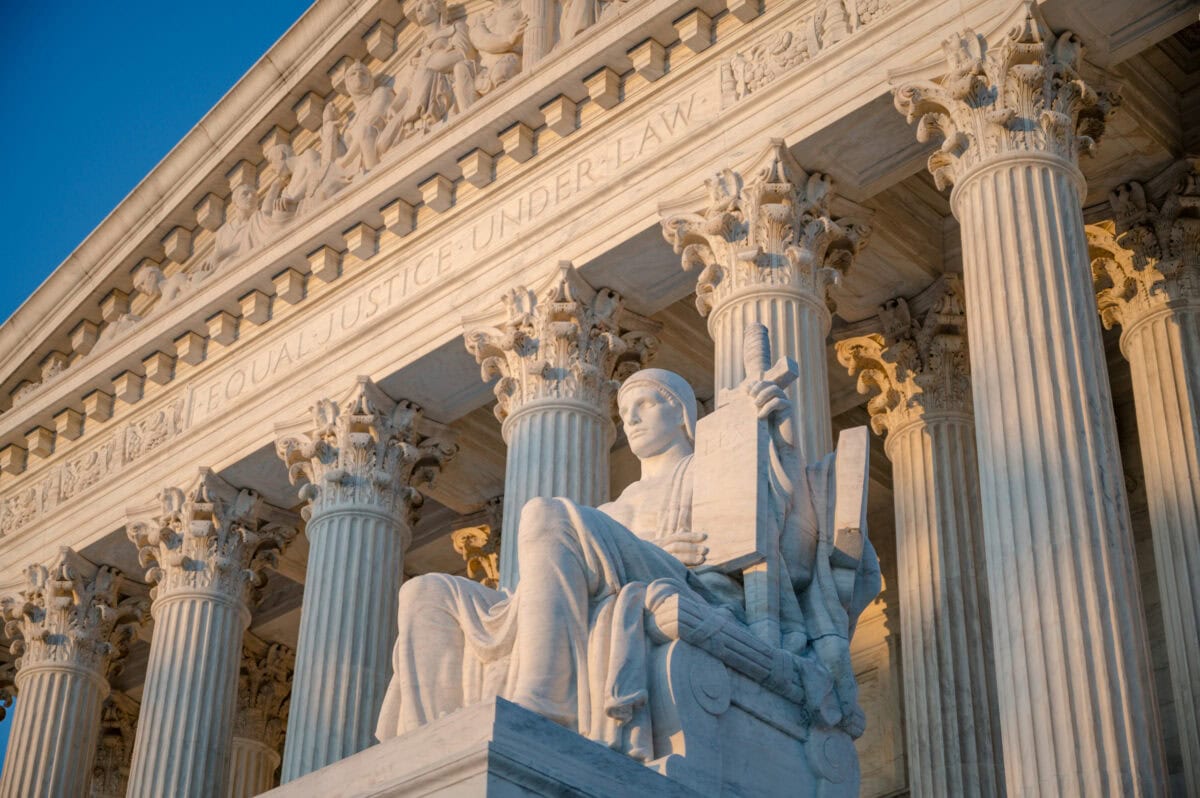
Yesterday, in Seven County Infrastructure Coalition v. Eagle County, Colorado, the Supreme Court addressed the scope of federal agencies’ obligations under the National Environmental Policy Act (NEPA) to study the environmental effects of proposed agency actions and prepare “detailed” reports, known as environmental impact statements. In the course of grappling with those questions, Justice Kavanaugh’s Seven County opinion may provide some insight into how under Loper Bright the Court may distinguish between questions of law that courts must independently decide and exercises of agency discretion subject to laxer arbitrary and capricious review.
(more…)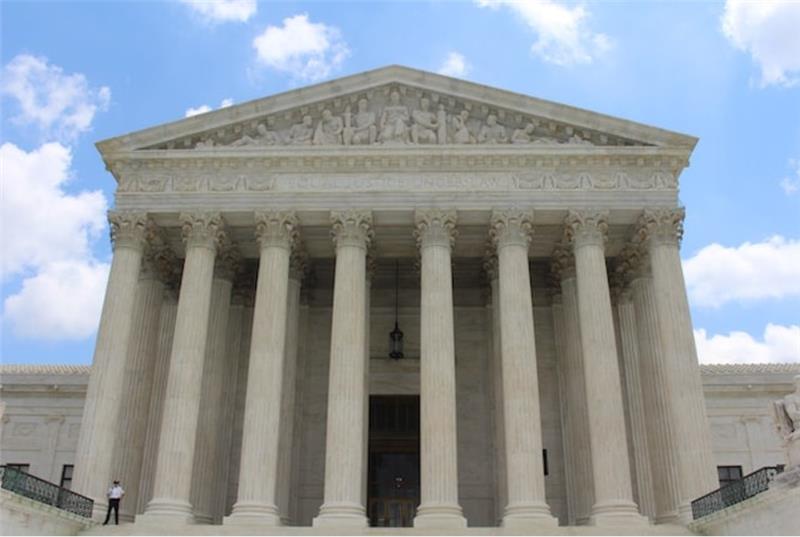
The Court of International Trade recently invalidated President Trump’s tariffs under the International Emergency Economic Powers Act of 1977 (“IEEPA”). The government argued, among other things, that the court could not consider the case because of the political question doctrine.
One reason that doctrine may apply is due to “a lack of judicially discoverable and manageable standards for resolving” the case. The court rejected that as a basis not to hear the case by relying on Loper Bright.
The court wrote:
This reliance on the political question doctrine is misplaced. The court can “manage” the
standards for applying 50 U.S.C. § 1701’s “deal with an unusual and extraordinary threat”
language just as it “manages” the standards for any other statutory enactment that constrains
independent executive action.…
Even when it goes unmentioned, this principle is a common feature of statutory construction. In the trade context, for example, the antidumping statute permits the imposition of duties only where “the Commission determines that . . . an industry in the United States . . . is threatened with material injury.” 19 U.S.C. § 1673. The court does not automatically uphold every material injury determination of the ITC on lack-of-manageable-standards grounds simply because “threatened with material injury” is an imprecise term that sounds in foreign affairs. Instead, the court consults “the traditional tools of statutory construction” to ascertain the term’s meaning and applies that meaning to specific cases. Loper Bright Enters. v. Raimondo, 603 U.S. 369, 403 (2024) . . . As the Supreme Court explained in Zivotofsky, “[r]esolution of Zivotofsky’s claim demands careful examination of the textual, structural, and historical evidence put forward by the parties regarding the nature of the statute and of the passport and recognition powers. This is what courts do. The political question doctrine poses no bar to judicial review of this case.” 566 U.S. at 201.
This is a new and interesting application of Loper Bright in the context of the political question doctrine. If courts’ core job is determining the legal meaning of terms, that is one fewer reason to find an issue nonjusticiable.

Bloomberg Law’s UnCommon Law podcast continues its series on the “story behind the fishing industry’s Chevron doctrine challenge.” This episode focuses on “the Supreme Court arguments that overturned Chevron.”
Federal agencies expanding their power beyond congressional intent? Unelected bureaucrats making policy decisions? Regulatory whiplash?! According to the litigants urging the Supreme Court to strike down the Chevron doctrine in the Loper Bright case, those were the harms Americans would continue to face if Chevron deference were allowed to continue.
But striking down the pivotal legal principle that had been in place for 40 years would bring its own risks, defenders of Chevron argued. Scientific and technical decisions would need to be made by judges with no specialized expertise. Regulatory uncertainty would soar, as thousands of existing rules face new challenges. And the Supreme Court itself could be forced to become, as Justice Ketanji Brown Jackson put it, “uber-legislators.”
In part two of our episode on Loper Bright, the high court ostensibly considers the plight of the herring fishermen, but actually looks to decide whether to abandon the Chevron doctrine once and for all.
Featuring:
- Jeff Kaelin, director of sustainability and government relations at Lund’s Fisheries
- Wayne Reichle, president of Lund’s Fisheries
- Ryan Mulvey, counsel with the Cause of Action Institute
- Gillian Metzger, Harlan Fiske Stone Professor of constitutional law at Columbia University
- Lydia Wheeler, co-host of Cases and Controversies & Supreme Court reporter for Bloomberg Law
- Greg Stohr, Supreme Court reporter for Bloomberg News
- Kimberly Robinson, co-host of Cases and Controversies & Supreme Court reporter for Bloomberg Law