
AFPF Marks Two Years of Loper Bright with Sen. Schmitt & Expert Panelists
By
| August 20, 2026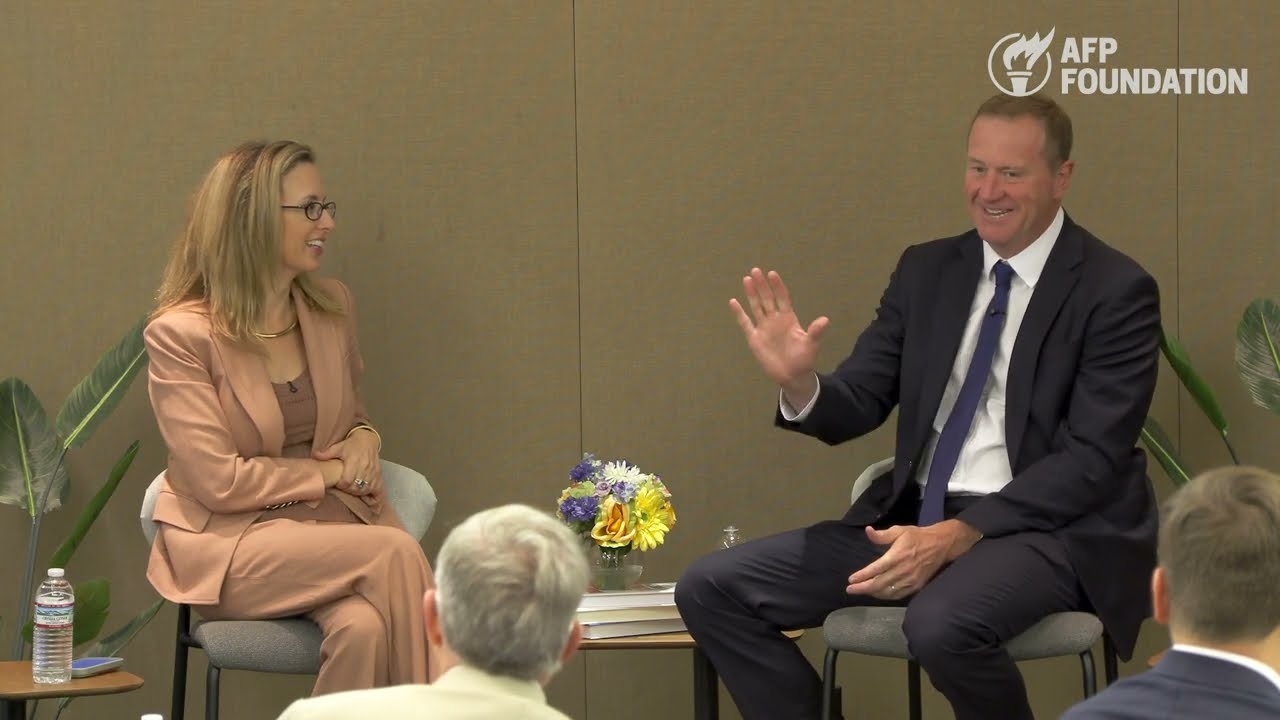
Last month, Americans for Prosperity Foundation (“AFPF”) hosted a special summit marking the two-year anniversary of the Supreme Court’s momentous decision in Loper Bright Enterprises v. Raimondo. The event was well attended, and registrants spent a half-day listening to experts explore how Loper Bright is driving the Trump Administration’s regulatory agenda and giving Congress the opportunity to reassert its Article I authority and rethink its relationship with the administrative state. While most public debate about Loper Bright understandably has focused on developments within the judiciary, AFPF’s summit underscores how the decision has proven more immediately transformative outside the courts, as political actors—legislators and regulators, alike—adjust to a world without Chevron deference.
Loper Bright Through the Eyes of a Senator
The summit kicked off with a “fireside chat” between Sarah Isgur (The Dispatch & SCOTUSblog) and Senator Eric Schmitt (R-MO). Sen. Schmitt has been a true champion in the post-Chevron space. For example, he led a special working group that published a report on how Congress can respond to the Loper Bright decision by legislating better. He has also highlighted the importance of Loper Bright in countless situations, from academic convenings to a judicial-nomination hearing.
During his interview, Sen. Schmitt explained how Loper Bright opens the door to Congress reasserting its Article I authority, “resetting the game” so that legislators can once again take seriously the job of drafting more detailed legislation. The decision also sets the stage for Congress to hold agencies more accountable for their implementation of federal law, whether through strengthened oversight and appropriations processes or robust use of the Congressional Review Act. Sen. Schmitt touched on potential structural reforms, too, which he thought could continue the momentum started by Loper Bright, such as codification of a de novo review standard in Section 706 of the APA or passage of the REINS Act. Finally, the Senator mentioned how the end of Chevron deference contributes to a trend of administrative-law victories for the center-right legal movement at the Supreme Court—the impact of which cannot yet be fully appreciated.
How Loper Bright Could Change How Congress Works
The first of the two expert panels brought together legislative staff members from the Senate and the House, including Ethan Harper (Senate Judiciary), Hunter Foster (HSGAC), Trace Mitchell (House Judiciary), and Christopher Prandoni (Senate Energy & Natural Resources). In a discussion facilitated by Elizabeth Slattery (Federalist Society), these panelists delved deeper into the impact of Loper Bright on the legislative branch.
Some of the most insightful points of the conversation touched on the lack of preparedness on the part of the Biden Administration with respect to implementing Loper Bright and recalibrating agency rulemaking in the wake of the Court’s overruling of Chevron deference. This had been a topic of cross-committee oversight efforts in the immediate wake of the decision. Panelists also described what concrete steps had been made—or were planned—to improve the drafting of legislative text, both in terms of defining terms and providing clarity to delegations of authority, as well as reimagining the relationship between congressional staff and legislative-branch agency experts, such as attorneys in the office of legislative counsel.
Panelists discussed the potential need for resource investment and capacity building, such as expanded staffing. They also explored what further administrative-law reforms might be needed. Potential reforms discussed ranged from codification of Loper Bright and the statutory displacement of other judicial-deference doctrines, such Skidmore deference or Auer/Kisor deference, to changing how courts review agency fact-finding or deal with so-called “junk science.” One panelist even questioned whether specific statutes could be revised to clarify existing broad delegations of authority to so-called “independent” regulatory agencies like the NLRB. Of note, the conversation also touched on the important role of independent non-governmental groups like AFP Foundation, Pacific Legal Foundation, and New Civil Liberties Alliance when it comes to identifying and challenging agency regulations that do not reflect the “best” meaning of the underlying statutory authorities. Through their litigation efforts, these groups draw attention to important policy debates or problematic regulatory schemes that may lead to needed reforms, or at least congressional oversight efforts.
Loper Bright and the Future of Executive-Branch Decision Making
The second panel included officials from the Trump Administration—Jonathan Berry (DOL) and GianCarlo Canaparo (DOJ)—and academia—Will Yeatman (GW Reg Center) and Aram Gavoor (GW Law)—for an exploration of the impact of Loper Bright on agency decision-making. This panel was particularly exciting as it was one of the first public presentations to include current Trump Administration officials discussing the President’s regulatory-reform agenda and the ways in which the overruling of Chevron deference is driving policymaking—something that can now be tracked in real-time at Recasting Regulations.
Agency panelists observed that the second Trump term is marked by a more focused and coherent, cross-agency approach to supervising the administrative state. This much is evident in the slew of executive orders—especially, Executive Order 14219 and its associated presidential memorandum—and other White House directives that clarify how regulations (or enforcement actions) ought to be developed or deregulatory actions prioritized. In all matters, the officials explained that statutory text and original public meaning must play a preeminent role in guiding agency decision-making. At the least, the new Loper Bright paradigm has driven home the importance of textualist considerations among career bureaucrats, who have historically been accustomed to a longstanding assumption that agencies possessed discretionary authority to pursue preferred policy objectives.
The panelists also explored how the shifting judicial environment is informing agency action. This is most true, of course, with recent developments in administrative and constitutional law, which heavily impact the design and function of the federal bureaucracy. Interestingly, one agency panelist even explained how the Administration anticipates and welcomes legal challenges to its rulemakings, as it expects to prevail on the merits and, in so doing, help develop favorable caselaw. In this regard, judicial recourse seemingly provides a swifter and more durable way to reform the administrative state. And this is particularly true given how Loper Bright provides certain interpretative and structural advantages to agencies when they are revisiting longstanding regulations that do not, in fact, represent the “best” meaning of the law.
There was some pushback from a non-agency panelist as to whether Loper Bright has been as substantively impactful as early Trump-aligned public figures predicted it would be. Reference was made, for example, to a Wall Street Journal op-ed published in late 2024, in which Elon Musk and Vivek Ramaswamy argued Loper Bright and West Virginia v. EPA show how “a plethora of current federal regulations exceed the authority Congress has granted under the law,” and therefore would serve as grounds for drastic and immediate reduction in the size and scope of the administrative state. That piece has been criticized before. But there was some counter-argument on this issue, which emphasized the White House’s concern for coupling deregulatory measures with greater durability against policy reversals under future administrations. The panelists at least agreed Loper Bright has been used powerfully in a “negative manner” to justify the rescission of more adventurous regulations—particularly those that previously survived judicial review under Chevron Step Two—as not reflecting the “best reading” of the law.
Conclusion
As I explained last Constitution Day, shortly after we celebrated Loper Bright’s one-year anniversary, the end of Chevron deference represents an important step towards recalibrating the relationship between the coordinate branches of our federal government. At least in cases governed by the APA, it has restored federal judges to their proper role: telling us what the law means. Certainly, the impact of Loper Bright on the courts has been obvious, as the many posts on the Recasting Regulations blog demonstrate. But Loper Bright also contained a consequential message for Congress. It is the Court’s invitation for Congress to reclaim its own proper constitutional responsibilities. Hopefully, in the long run, Loper Bright will lead to a more engaged and robust legislative branch that drafts specific legislation, is cognizant of the limits of its delegations of legislative authority, and better supervises regulatory implementation. Relatedly, Loper Bright should lead to better rulemaking grounded in statutory text, respectful of the limits of Congress’s delegations, and cognization that agency discretion can be a source of mischief.
Ryan P. Mulvey is senior policy counsel at Americans for Prosperity Foundation.

