
Federal Trade Commission Agrees To Permanently End Administrative Investigation of Nonprofit In Win For the First Amendment, Due Process, and the Rule of Law
By
| May 7, 2026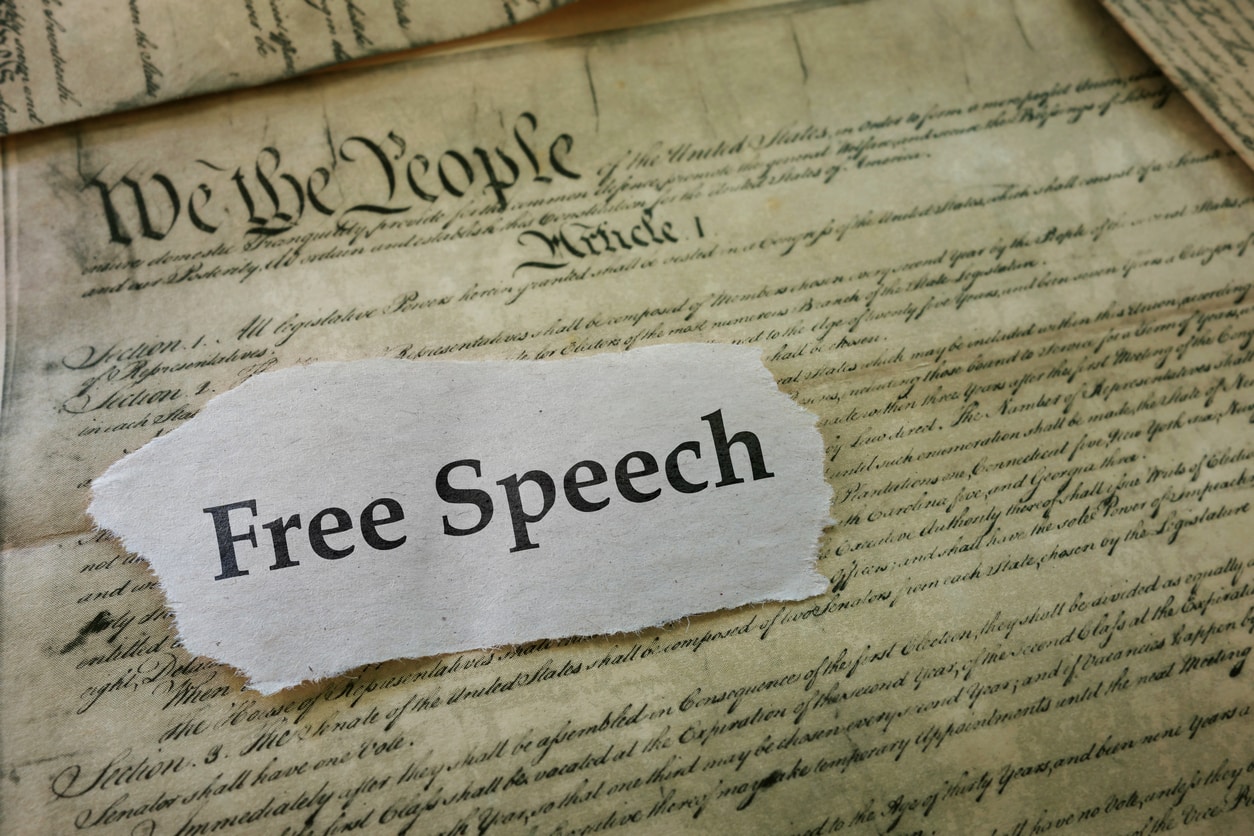
Earlier this week, Media Matters, an organization that engages in speech protected by the First Amendment, announced a historic settlement with the Federal Trade Commission, permanently ending the agency’s investigation into Media Matters after it successfully blocked the FTC’s administrative demands in a pre-enforcement constitutional challenge. Whether one agrees with Media Matters’s message or not, this is an important victory for free speech and the rule of law that should benefit those facing agency investigations they believe to be unconstitutional.
The precedent Media Matters has set applies across the ideological spectrum to businesses, organizations, and individuals alike. And it underscores that under no circumstances may the government use its coercive force to silence its critics and chill speech it does not like. In particular, it cannot launch investigations and enforcement actions in retaliation for the exercise of First Amendment rights. If it were otherwise, the government could shut down the robust public debate vital to the health of our constitutional Republic and become the de facto arbiter of truth in the public square. This win should be celebrated by those who cherish the freedoms protected by the First Amendment—including its protection of speech one may strongly disagree with—and those who believe the courthouse doors must remain open to constitutional challenges.
Background
The FTC is among the most powerful federal agencies in the country. It claims to have jurisdiction over most of the private economy, with “enforcement or administrative responsibilities under more than 80 laws.” It possesses vast prosecutorial powers, including the ability to bring enforcement actions seeking daunting injunctions and civil penalties in federal court as well as the power to bring enforcement actions in its own inhouse courts—where the agency acts as prosecutor and judge of its own cause, makes the rules of the game, and almost invariably finds in favor of itself. The FTC also has sweeping investigative authority, including the power to issue administrative subpoenas, known as civil investigative demands or CIDs, requiring recipients to produce documents, provide information, and sit for depositions. Indeed, the Supreme Court has said that FTC may “investigate merely on suspicion that the law is being violated, or even just because it wants assurance that it is not.” In practice, companies that might not even know they are regulated by the FTC sometimes receive sweeping CIDs out of the blue that may only vaguely describe the purpose of the investigation. Recipients of CIDs may have no idea what they allegedly did wrong, why the FTC is contacting them, whether they are even a subject or target of the investigation, or the multi-year administrative odyssey that may await them.
FTC CIDs are often highly invasive and can impose onerous time and monetary compliance costs, particularly on small businesses that are ill-equipped to bear such costs. As the ABA Section of Antitrust Law observed in 2017, “[t]he result in many cases” of overbroad CIDs “has been that companies have incurred astronomical costs in responding. . . . Just the legal fees alone that targets incur in negotiating the terms of the CID and making the production can be prohibitive.” FTC investigations can drag on for years, with the sword of Damocles hanging over the target for the duration. In a very real sense, the process itself is the punishment even when no liability is established. The FTC’s abuse of CIDs and its broad investigative powers to go on fishing expeditions and pressure companies into settlements have long been a problem. As targets of FTC investigations are aware, federal courts play a limited role in CID enforcement proceedings, and judicial review of agency CIDs is limited and deferential. Successful challenges to FTC CIDs in court are thus highly unusual.
The FTCs Investigation of Media Matters
Although the FTC’s authority to investigate companies is broad, it is not unlimited. And the agency does not have jurisdiction over nonprofits. Nevertheless, in May 2025 the FTC issued a sweeping CID to Media Matters, a 501(c)(3) nonprofit organization, as part of its advertising boycotting investigation. Among other things, the FTC’s CID sought information about Media Matters’s newsgathering and journalistic activities. Facing irreparable harm of uncertain duration flowing from the CID, including chilling of its exercise of its First Amendment rights, Media Matters decided to fight back while still in administrative purgatory. Thankfully, just last week in First Choice Women’s Resource Centers, Inc. v. Davenport, the Supreme Court unanimously recognized that subpoenas can cause First Amendment harms.
Without waiting for the FTC to file a petition to enforce its CID, Media Matters brought a pre-enforcement constitutional challenge to the CID in federal district court, arguing the agency issued it in retaliation for Media Matters’s speech and journalistic activities. Until recently, Media Matters might not have been allowed its day in court unless and until the FTC brought an action to enforce its CID—no matter how abusive the agency’s behavior, the degree of irreparable harm and unrecoupable expense it caused Media Matters to suffer, or the length of the investigation. But a seminal and unanimous 2023 Supreme Court decision, Axon v. FTC, now makes clear that the courthouse doors must remain open to these constitutional challenges to FTC CIDs, and the agency cannot duck and weave its way out of judicial review of its actions merely by keeping the subject or target of its investigation in administrative limbo.
Federal Court Proceedings and Settlement
In August 2025, Judge Sparkle Sooknanan of the U.S. District Court for the District of Columbia rejected the FTC’s argument that the court lacked jurisdiction to rule on the constitutionality of the CID unless and until the FTC decided to file a petition to enforce it. She further found that Media Matters was likely to succeed on its First Amendment retaliation claim and that the FTC’s CID was causing Media Matters to suffer irreparable harm to its First Amendment rights. She then issued a preliminary injunction enjoining the FTC from “implementing or enforcing” it. Judge Sooknanan’s ruling was a big deal. It is rare for a court to deny an agency’s petition to enforce an administrative subpoena in the ordinary course, particularly on constitutional grounds. And it is almost unheard of for a federal court to enjoin an agency from doing so in a pre-enforcement posture—a point the FTC would later make.
The FTC promptly appealed to the D.C. Circuit, seeking an emergency stay of Judge Sooknanan’s ruling. In a 2-1 decision, the motions panel rejected the FTC’s argument that Media Matters must await an enforcement proceeding before it could get its day in court, upholding the district court’s preliminary injunction. Judge Walker dissented, arguing that Media Matters was not likely to succeed on its First Amendment claim on the facts, recounting how it stacked up against the prior FTC Chair’s statements and actions in connection with FTC investigations and enforcement actions during the prior administration. But he did not question the district court’s jurisdiction to reach the merits of that claim on pre-enforcement review.
The case was then briefed on the merits. Underscoring the importance of Media Matters’s lawsuit, organizations from across the spectrum weighed in with friend-of-the-court briefs in support of Media Matters’s lawsuit, including briefs filed by fifteen news organizations, the Cato Institute, the Foundation for Individual Rights and Expression joined by the ACLU, and many others. The New Civil Liberties Alliance also weighed in to support Media Matters’s right to have its constitutional claims heard in federal court without having to wait for the FTC to file a petition to enforce the CID.
The D.C. Circuit merits panel greeted the FTC’s arguments against jurisdiction and in support of the CID skeptically, including the underlying rationale for issuing it. A week later, the FTC filed a motion to voluntarily dismiss its appeal, which Media Matters opposed, suggesting the FTC was attempting to duck an adverse ruling after a poor showing at oral argument. Last week Media Matters brought the Supreme Court’s unanimous ruling in First Choice to the D.C. Circuit’s attention. The next day, the parties filed a voluntary stipulation of dismissal, which was subsequently granted.
We now may know why. Earlier this week, Media Matters announced it had reached a settlement with FTC. As described by Media Matters:
Facing the prospect of a loss from what’s often considered the nation’s second highest court, the FTC ultimately submitted to a legally binding settlement agreement with Media Matters, withdrawing its blatantly retaliatory demands and committing to forgo ever reissuing or issuing a substantially similar Civil Investigative Demand to Media Matters.
The FTC also stated—in writing—that Media Matters is not the target of any investigation and that any similar future litigation would occur in D.C. The agreement—and the decisions Media Matters won in the district court and the court of appeals—offers a roadmap for other newsgathering and nonprofit organizations facing, or at risk of, government retaliation.
Conclusion
Whatever one thinks about how Media Matters chooses to exercise its First Amendment rights, its factual allegations against the FTC, or the merits of Media Matters’s First Amendment retaliation claim, Media Matters’s lawsuit is an important victory for free speech, First Amendment rights, and administrative due process. And it is critically important that the courthouse doors be kept open to those facing agency investigations or enforcement actions they believe to be unconstitutional or ultra vires. Parties should not be forced to endure agency abuse in perpetuity without access to a fair and neutral Article III court. That proposition may hold particularly true when agencies like the FTC leverage vast investigative and prosecutorial powers to silence speech they do not like and retaliate against their critics for exercising their First Amendment rights.
Kudos to Media Matters and its legal team for standing up to the FTC in defense of the free speech and rule of law , as well as those across the spectrum who supported Media Matters’s First Amendment rights or basic right to its day in court.
Michael Pepson is regulatory counsel at Americans for Prosperity Foundation.

